
For busy professionals who cannot disappear to rehab and are tired of gambling with their future...
The 200-Year-Old Behavior Change Technology Re-Discovered for Functional Professionals in 2026
How a simple $7 pamphlet can out perform rehab, AA meetings, and "just use willpower" advice for professionals who are functional on the outside but privately scared.
For busy professionals who cannot disappear to rehab and are tired of gambling with their future...
The 200-Year-Old Behavior Change Technology Re-Discovered for Functional Professionals in 2026
How a simple $7 pamphlet is out-performing rehab, AA meetings, and "just use willpower" advice for professionals who are functional on the outside but privately scared.

The Forgotten Tool That Changed Behavior
Long before "addiction treatment" was an industry, before disease labels, before lifetime meetings… there was the behavior change pamphlet.
Temperance Reformers used them in the 1800's to address root causes. Practical thinkers used them to change patterns when the mainstream approach wasn't working.
It was the first scalable intervention. Simple to understand, impossible to ignore, and transformative when the framework was right.
And here's the part most people miss…
These tools didn't just inform. They liberated. They moved people from shame to understanding, from willpower to strategy, from symptom management to root cause resolution.
That same mechanic still works today, if you know how to modernize it.
The Forgotten Tool That Changed Behavior
Long before "addiction treatment" was an industry, before disease labels, before lifetime meetings… there was the behavior change pamphlet.
Benjamin Franklin used them to shift habits. Reformers used them to address root causes. Practical thinkers used them to change patterns when the mainstream approach wasn't working.
It was the first scalable intervention. Simple to understand, impossible to ignore, and transformative when the framework was right.
And here's the part most people miss…
These tools didn't just inform. They liberated. They moved people from shame to understanding, from willpower to strategy, from symptom management to root cause resolution.
That same mechanic still works today, if you know how to modernize it.
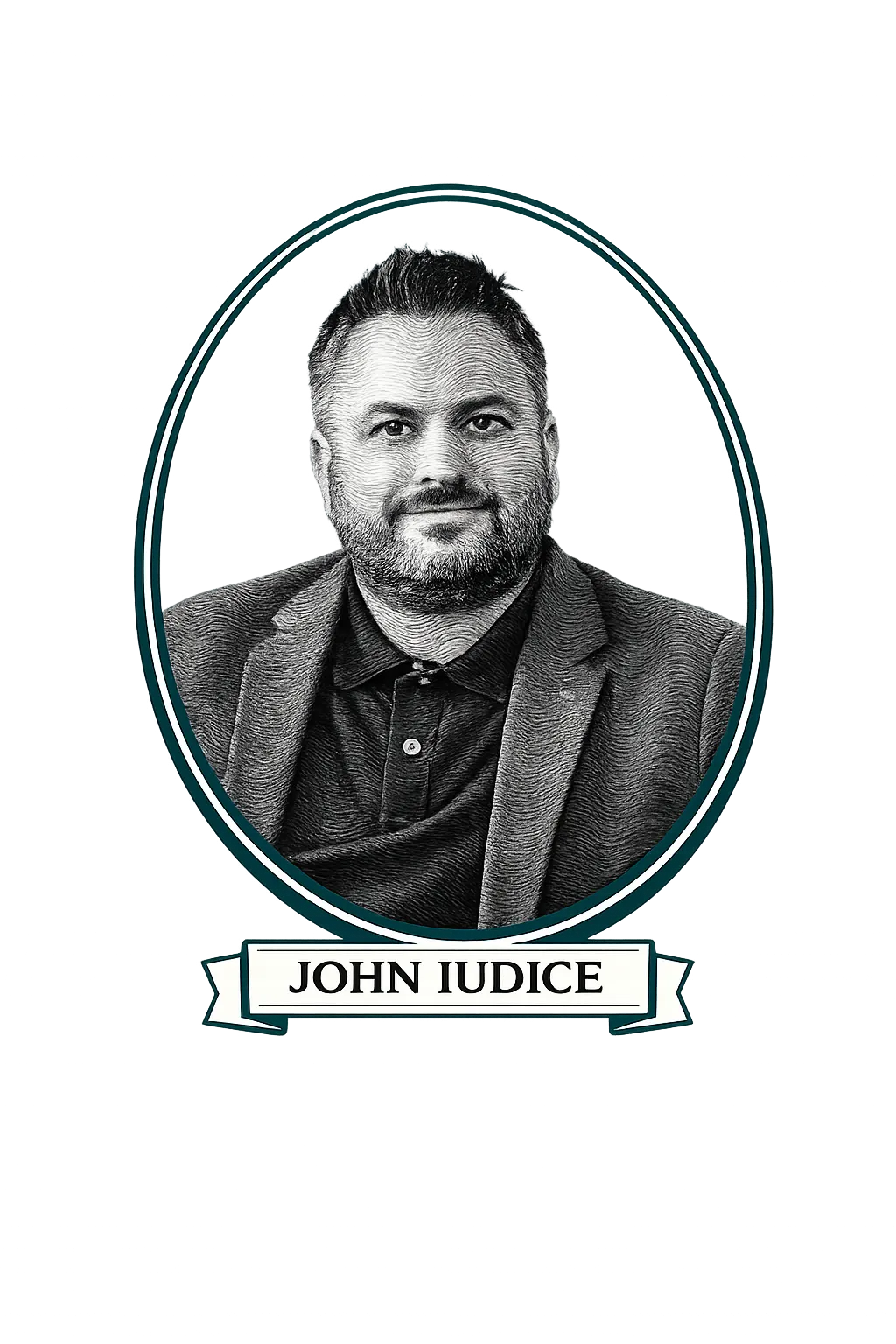
Hi, I'm John Iudice
If you're reading this, there's a good chance you've been lying to yourself.
Not about whether alcohol or drugs are becoming a problem.
About whether you can fix it on your own.
You've tried cutting back.
You've tried to be disciplined.
You've promised yourself that Monday will be different.
And you're still here.
Still stuck in the cycle.
Still terrified that the next slip-up will be the one that costs you everything.
I didn't figure this out in a classroom.
I lived it.
Two DWIs.
The second one, sitting in a cell, I honestly thought my life was over before it started.
What made it worse is this:
After my first DWI, I did the standard program. I sat through the weekend course. I got picked up by my buddy.
And we stopped to drink on the way home.
That's when I knew something was broken.
Not in me.
In the way we approach this problem.
It was big. And it worked… until it didn’t.
Lean in, because what I'm about to tell you is important.
Your substance use isn't a disease.
It's a behavior pattern.
For years, you've been told to:
Accept a lifetime identity label (alcoholic, addict)
Admit you're powerless
Commit to lifelong meetings
Believe willpower is the answer
You tried.
You white-knuckled it.
You made promises.
But the behavior didn't change.
Then you used again.
And again.
And again.
From the outside looking in, you look functional.
You have the job.
The title.
The responsibilities.
The family.
But the reality isn't quite so clean.
You're one bad decision away from losing everything.
You drink or use more than you planned.
You've had close calls.
Your spouse is worried.
You're lying about how much.
You're terrified of what happens next.
This isn't a character flaw.
This is a behavior pattern serving a purpose you haven't addressed.
And behavior patterns don't change through willpower alone.
Hi, I'm John Iudice
If you're reading this, there's a good chance you've been lying to yourself.
Not about whether alcohol or drugs are becoming a problem.
About whether you can fix it on your own.
You've tried cutting back.
You've tried to be disciplined.
You've promised yourself that Monday will be different.
And you're still here.
Still stuck in the cycle.
Still terrified that the next slip-up will be the one that costs you everything.
I didn't figure this out in a classroom.
I lived it.
Two DWIs.
The second one, sitting in a cell, I honestly thought my life was over before it started.
What made it worse is this:
After my first DWI, I did the standard program. I sat through the weekend course. I got picked up by my buddy.
And we stopped to drink on the way home.
That's when I knew something was broken.
Not in me.
In the way we approach this problem.
It was big. And it worked… until it didn’t.
Lean in, because what I'm about to tell you is important.
Your substance use isn't a disease.
It's a behavior pattern.
For years, you've been told to:
Accept a lifetime identity label (alcoholic, addict)
Admit you're powerless
Commit to lifelong meetings
Believe willpower is the answer
You tried.
You white-knuckled it.
You made promises.
But the behavior didn't change.
Then you used again.
And again.
And again.
From the outside looking in, you look functional.
You have the job.
The title.
The responsibilities.
The family.
But the reality isn't quite so clean.
You're one bad decision away from losing everything.
You drink or use more than you planned.
You've had close calls.
Your spouse is worried.
You're lying about how much.
You're terrified of what happens next.
This isn't a character flaw.
This is a behavior pattern serving a purpose you haven't addressed.
And behavior patterns don't change through willpower alone.
Stop fighting the symptom. Start addressing the root.
Most approaches to substance use focus on:
Accept a lifetime identity label (alcoholic, addict)
Admit you're powerless
Commit to lifelong meetings
The substance (as if alcohol or drugs are the enemy)
Willpower (as if you're not already trying)
Lifetime labels (as if identity determines destiny)
Avoiding triggers (as if you can avoid your entire life)
None of these work because they treat the symptom, not the cause.
Your substance use is solving for something:
Stress relief
Social confidence
Numbing
Transition from work to home
Sleep
By the time you're white-knuckling, the pattern has already won.
The law: All behavior serves a purpose. Change the purpose, change the behavior.

Platforms evolve. The way behavior patterns resolve has not.
The real question is the same it's been for 200 years:
"What is this behavior solving for and how do I address that instead?"
Behavioral scientists answered it with root cause frameworks. They identified the function, not just the substance.
People used them. Patterns changed. Lives rebuilt.
I used the same law, modernized, to build The Root Cause Protocol, a 3-step system that identifies what your substance use is solving for so you can change the behavior without rehab, lifetime meetings, or permanent labels.
Why it works:
Professionals identify what substance use is solving for (stress, confidence, numbing, transition)
They address the root cause (not just the symptom)
They change behavior in their real environment (not in a facility they'll leave in 30 days)
That's why I built this protocol: to give functional professionals the behavior change framework the treatment industry never provided.
Stop fighting the symptom. Start addressing the root.
Most approaches to substance use focus on:
Accept a lifetime identity label (alcoholic, addict)
Admit you're powerless
Commit to lifelong meetings
The substance (as if alcohol or drugs are the enemy)
Willpower (as if you're not already trying)
Lifetime labels (as if identity determines destiny)
Avoiding triggers (as if you can avoid your entire life)
None of these work because they treat the symptom, not the cause.
Your substance use is solving for something:
Stress relief
Social confidence
Numbing
Transition from work to home
Sleep
By the time you're white-knuckling, the pattern has already won.
The law: All behavior serves a purpose. Change the purpose, change the behavior.
Platforms evolve. The way behavior patterns resolve has not.
The real question is the same it's been for 200 years:
"What is this behavior solving for—and how do I address that instead?"
Behavioral scientists answered it with root cause frameworks. They identified the function, not just the substance.
People used them. Patterns changed. Lives rebuilt.
I used the same law, modernized, to build The Root Cause Protocol —a 3-step system that identifies what your substance use is solving for so you can change the behavior without rehab, lifetime meetings, or permanent labels.
Why it works:
Professionals identify what substance use is solving for (stress, confidence, numbing, transition)
They address the root cause (not just the symptom)
They change behavior in their real environment (not in a facility they'll leave in 30 days)
That's why I built this protocol: to give functional professionals the behavior change framework the treatment industry never provided.
Before we move forward...
✅ This is FOR you if:
You're a busy professional who cannot disappear to rehab
You're functional on the outside but privately scared
You've tried cutting back and it hasn't stuck
You don't want a lifetime identity label
You've had close calls or consequences
You want to understand the root cause, not just fight the substance
You're tired of gambling with your future
❌ This is NOT for you if:
You're in immediate danger or at risk of withdrawal complications
You need intensive medical supervision
You're looking for permission to keep using
You think this is a magic bullet that requires no effort
You're not willing to be honest about what's driving the behavior
You believe the disease model is the only valid approach
If you see yourself here, keep reading. If not, save your $7.
Before we move forward...
✅ This is FOR you if:
You're a busy professional who cannot disappear to rehab
You're functional on the outside but privately scared
You've tried cutting back and it hasn't stuck
You don't want a lifetime identity label
You've had close calls or consequences
You want to understand the root cause, not just fight the substance
You're tired of gambling with your future
❌ This is NOT for you if:
You're in immediate danger or at risk of withdrawal complications
You need intensive medical supervision
You're looking for permission to keep using
You think this is a magic bullet that requires no effort
You're not willing to be honest about what's driving the behavior
You believe the disease model is the only valid approach
If you see yourself here, keep reading. If not, save your $7.
Why Most Professionals Miss This Completely
If you lined up 100 people struggling with substance use and asked how they're handling it, you'd hear the same thing:
"I just need more willpower"
"I need to hit rock bottom first"
"I need to go to rehab"
"I need to accept I'm an addict"
That's the default playbook. Everyone runs it. Everyone looks identical.

The truth is, most treatment approaches are designed backwards.
They start with the substance (what you're using) instead of the function (what it's solving for).
That's why willpower fails.
That's why rehab doesn't stick.
That's why you can stop for a week—and then use again.
When you flip the sequence—when you identify the root cause first—everything changes.
The urge still appears.
But you know what it's solving for.
And suddenly, you're not just fighting a craving… you're addressing the real problem.
Why Most Professionals Miss This Completely
If you lined up 100 people struggling with substance use and asked how they're handling it, you'd hear the same thing:
"I just need more willpower"
"I need to hit rock bottom first"
"I need to go to rehab"
"I need to accept I'm an addict"
That's the default playbook. Everyone runs it. Everyone looks identical.
The truth is, most treatment approaches are designed backwards.
They start with the substance (what you're using) instead of the function (what it's solving for).
That's why willpower fails.
That's why rehab doesn't stick.
That's why you can stop for a week—and then use again.
When you flip the sequence—when you identify the root cause first—everything changes.
The urge still appears.
But you know what it's solving for.
And suddenly, you're not just fighting a craving… you're addressing the real problem.
What Happens If You Ignore This?
You'll keep trying to cut back on your own.
You'll keep making promises you can't keep.
You'll keep having close calls that get closer.
In as little as six months, the gap between you and professionals who addressed the root cause will be too wide to close.
If you've been struggling long enough, you've seen it: good people lose everything not because they're weak, but because they kept fighting the symptom instead of the cause.
Meanwhile, the ones who address the root cause build sustainable change, rebuild trust, and create lives where substances aren't needed—without rehab or lifetime meetings.
There's no neutral ground here.
You're either addressing the root cause—or gambling with your future.
What Happens If You Ignore This?
You'll keep trying to cut back on your own.
You'll keep making promises you can't keep.
You'll keep having close calls that get closer.
In as little as six months, the gap between you and professionals who addressed the root cause will be too wide to close.
If you've been struggling long enough, you've seen it: good people lose everything not because they're weak, but because they kept fighting the symptom instead of the cause.
Meanwhile, the ones who address the root cause build sustainable change, rebuild trust, and create lives where substances aren't needed—without rehab or lifetime meetings.
There's no neutral ground here.
You're either addressing the root cause—or gambling with your future.
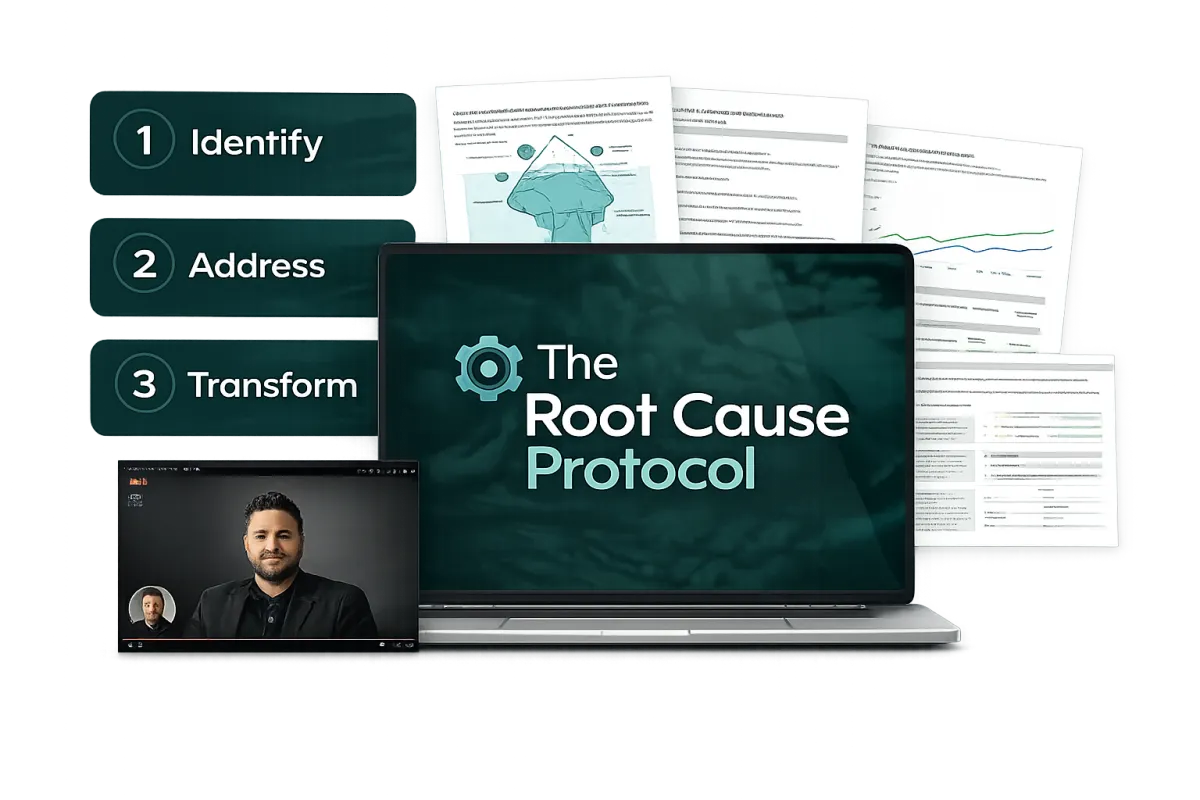
The $7 Protocol That Changes Behavior at the Root
The Root Cause Protocol is the behavior change framework I built for functional professionals who can't afford another failed attempt.
What is it?
A stripped-down 3-step system built on a single idea: if you identify what your substance use is solving for and address that root cause, the behavior changes without willpower, rehab, or lifetime labels.
Instead of fighting the substance, you understand the function.
Instead of white-knuckling, you change the pattern.
Instead of disappearing to rehab, you change in your real environment.
The framework is broken into 7 sections so you can understand the root cause, change the pattern, and rebuild without disrupting your life:
Section 1: The Real Problem
Why the healthcare system treats substance use differently (and why that matters)
Disease model vs. Behavior model
The 3 discoveries that change everything:
Rehab and lifetime meetings aren't always necessary
All behavior serves a purpose
Environment matters more than willpower
Section 2: The Access Recovery Method
The 3-step system:
Step 1: REDEFINE (from "I'm an addict" to "I learned this pattern")
Step 2: REWIRE (identify high-risk moments and create pattern interrupts)
Step 3: REBUILD (create a life where substances aren't needed
Plus: Exercises to identify what your use is solving for
Section 3: Your Path Forward
Path 1: Self-directed implementation (when this works)
Path 2: Personalized support (when you need help in high-risk moments)

Section 4: The 7-Day Starter Plan
Days 1-2: Observe without judgment
Days 3-4: Identify your top 3 triggers
Days 5-6: Make one environmental change
Day 7: Assess and adjust
Section 5: What Is Possible
What life looks like 6 weeks from now when you address the root cause
Section 6: The Three Types of People
Type 1: Early (pattern forming, few consequences)
Type 2: Danger zone (close calls, spouse worried)
Type 3: Crisis (marriage on the line, job at risk)

Section 7: The Invitation
How to book a free Drug and Alcohol Use Severity Assessment if you need personalized support
By the time you're done, you won't just understand your substance use.
You'll know exactly what it's solving for—and how to address that without rehab, meetings, or lifetime labels.
Stop fighting the symptom. Address the root cause in 7 days—and watch $7 turn into the clarity that changes everything.
Professionals have paid thousands for rehab that didn't address the root cause.
But for a limited time, I'm setting the price of all of this to just...
$7
The $7 Protocol That Changes Behavior at the Root
The Root Cause Protocol is the behavior change framework I built for functional professionals who can't afford another failed attempt.
What is it?
A stripped-down 3-step system built on a single idea: if you identify what your substance use is solving for and address that root cause, the behavior changes without willpower, rehab, or lifetime labels.
Instead of fighting the substance, you understand the function.
Instead of white-knuckling, you change the pattern.
Instead of disappearing to rehab, you change in your real environment.
The framework is broken into 7 sections so you can understand the root cause, change the pattern, and rebuild without disrupting your life:
Section 1: The Real Problem
Why the healthcare system treats substance use differently (and why that matters)
Disease model vs. Behavior model
The 3 discoveries that change everything:
Rehab and lifetime meetings aren't always necessary
All behavior serves a purpose
Environment matters more than willpower
Section 2: The Access Recovery Method
The 3-step system:
Step 1: REDEFINE (from "I'm an addict" to "I learned this pattern")
Step 2: REWIRE (identify high-risk moments and create pattern interrupts)
Step 3: REBUILD (create a life where substances aren't needed
Plus: Exercises to identify what your use is solving for
Section 3: Your Path Forward
Path 1: Self-directed implementation (when this works)
Path 2: Personalized support (when you need help in high-risk moments)

Section 4: The 7-Day Starter Plan
Days 1-2: Observe without judgment
Days 3-4: Identify your top 3 triggers
Days 5-6: Make one environmental change
Day 7: Assess and adjust
Section 5: What Is Possible
What life looks like 6 weeks from now when you address the root cause
Section 6: The Three Types of People
Type 1: Early (pattern forming, few consequences)
Type 2: Danger zone (close calls, spouse worried)
Type 3: Crisis (marriage on the line, job at risk)
Section 7: The Invitation
How to book a free Drug and Alcohol Use Severity Assessment if you need personalized support
By the time you're done, you won't just understand your substance use.
You'll know exactly what it's solving for—and how to address that without rehab, meetings, or lifetime labels.
Stop fighting the symptom. Address the root cause in 7 days—and watch $7 turn into the clarity that changes everything.
Professionals have paid thousands for rehab that didn't address the root cause.
But for a limited time, I'm setting the price of all of this to just...
$7
The risk isn’t trying. It’s waiting.
Every month you hesitate, two things happen:
The pattern compounds.
Every time you use, your brain reinforces the behavior pattern.
The stakes increase.
Close calls become consequences. Consequences become crises.
Meanwhile, a few professionals discover this protocol.
They don't look "recovered"—they look clear.
They identify what their use was solving for.
They address the root cause.
They change the pattern in their real environment.
They rebuild without disrupting their lives.
When this shifts from quiet edge to common knowledge, you'll be playing catch-up.
That's the late tax: you arrive after crisis and pay with consequences that could've been prevented.
There’s no middle ground.
You're addressing the root cause now—or gambling
with your future longer.
The risk isn’t trying. It’s waiting.
Every month you hesitate, two things happen:
The pattern compounds.
Every time you use, your brain reinforces the behavior pattern.
The stakes increase.
Close calls become consequences. Consequences become crises.
Meanwhile, a few professionals discover this protocol.
They don't look "recovered"—they look clear.
They identify what their use was solving for.
They address the root cause.
They change the pattern in their real environment.
They rebuild without disrupting their lives.
When this shifts from quiet edge to common knowledge, you'll be playing catch-up.
That's the late tax: you arrive after crisis and pay with consequences that could've been prevented.
There’s no middle ground.
You're addressing the root cause now—or gambling
with your future longer.
The Oldest Play Still Winning

In the 1800s, behavioral reformers used root cause frameworks to change patterns.
Simple. Direct. Effective.
It spread. Patterns changed. Lives rebuilt.
Today the press is digital. A $7 protocol does the same job—tiny paid commitment, root cause identified, behavior changed.
Professionals are using this protocol and reporting:
"I finally understand what I was using for"
"I changed the pattern without rehab"
"I addressed the root cause in my real environment"
"I rebuilt trust without a lifetime label"
The winners move first. The rest show up late and pay with consequences.
Get The Root Cause Protocol Now Before Another Close Call
Tap the button below, grab your spot, and identify what your substance use is solving for so you can address the root cause instead of fighting the symptom.
The Oldest Play Still Winning
In the 1800s, behavioral reformers used root cause frameworks to change patterns.
Simple. Direct. Effective.
It spread. Patterns changed. Lives rebuilt.
Today the press is digital. A $7 protocol does the same job—tiny paid commitment, root cause identified, behavior changed.
Professionals are using this protocol and reporting:
"I finally understand what I was using for"
"I changed the pattern without rehab"
"I addressed the root cause in my real environment"
"I rebuilt trust without a lifetime label"
The winners move first. The rest show up late and pay with consequences.
Get The Root Cause Protocol Now Before Another Close Call
Tap the button below, grab your spot, and identify what your substance use is solving for so you can address the root cause instead of fighting the symptom.
You may be thinking...
"Isn't this just denying I have a problem?"
No. This acknowledges the problem and addresses it at the root cause level. It's not denial—it's precision.
"I've tried everything. Why would this work?"
You've tried symptom management (willpower, cutting back, white-knuckling). This addresses root cause (what the behavior is solving for). Different level, different results.
"What if I need medical detox or intensive treatment?"
This protocol includes guidance on when you need higher levels of care. If you're at risk medically, we'll tell you. This is education, not medical advice.
"Can I really change without rehab or meetings?"
Many people can—if they address the root cause and have support during high-risk moments. Some need intensive treatment. The protocol helps you determine which path fits your situation.
"What if my use is too severe for this?"
The protocol includes an assessment framework to determine severity. If you need intensive treatment, the pamphlet will make that clear. Either way, you gain clarity.
"What if I've been using for years?"
Timeline doesn't determine whether this works. What matters is whether you're willing to identify the root cause and change the pattern. People with decades of use have changed using these principles.
"What about refunds?"
60-day guarantee. If you read the protocol and don't understand what your use is solving for—or don't see a path forward—email us for a full refund.
You may be thinking...
"Isn't this just denying I have a problem?"
No. This acknowledges the problem and addresses it at the root cause level. It's not denial—it's precision.
"I've tried everything. Why would this work?"
You've tried symptom management (willpower, cutting back, white-knuckling). This addresses root cause (what the behavior is solving for). Different level, different results.
"What if I need medical detox or intensive treatment?"
This protocol includes guidance on when you need higher levels of care. If you're at risk medically, we'll tell you. This is education, not medical advice.
"Can I really change without rehab or meetings?"
Many people can—if they address the root cause and have support during high-risk moments. Some need intensive treatment. The protocol helps you determine which path fits your situation.
"What if my use is too severe for this?"
The protocol includes an assessment framework to determine severity. If you need intensive treatment, the pamphlet will make that clear. Either way, you gain clarity.
"What if I've been using for years?"
Timeline doesn't determine whether this works. What matters is whether you're willing to identify the root cause and change the pattern. People with decades of use have changed using these principles.
"What about refunds?"
60-day guarantee. If you read the protocol and don't understand what your use is solving for—or don't see a path forward—email us for a full refund.
TLDR: Get The Root Cause Protocol for only $7
Identify what your substance use is solving for and address the root cause so you can change the behavior without rehab, lifetime meetings, or permanent labels.
Inside you'll get instant access to:
The 3 discoveries that change everything
Disease model vs. Behavior model (and why it matters)
The Access Recovery Method (3-step system: Redefine, Rewire, Rebuild)
Exercises to identify what your use is solving for
The 7-Day Starter Plan (observe, identify, change, assess)
The three types of people (and which one you are)
Guidance on when self-directed work is enough vs. when you need support
How to book a free severity assessment if you need personalized help

60-Day "Clarity or Refund" Guarantee
Read the protocol. Complete the 7-day starter plan. If you don't understand what your use is solving for—or don't see a clear path forward—email us within 60 days for a full refund.
No hoops. No questions.
I built this to help functional professionals address root causes instead of fighting symptoms—if it doesn't do that for you, I insist you get your money back.
Still not convinced?
Totally fine. If you'd rather talk to a human first, email support@[yourdomain].com or book a free Drug and Alcohol Use Severity Assessment.
I'll tell you straight if this isn't for you—no pressure.
TLDR: Get The Root Cause Protocol for only $7
Identify what your substance use is solving for and address the root cause so you can change the behavior without rehab, lifetime meetings, or permanent labels.
Inside you'll get instant access to:
The 3 discoveries that change everything
Disease model vs. Behavior model (and why it matters)
The Access Recovery Method (3-step system: Redefine, Rewire, Rebuild)
Exercises to identify what your use is solving for
The 7-Day Starter Plan (observe, identify, change, assess)
The three types of people (and which one you are)
Guidance on when self-directed work is enough vs. when you need support
How to book a free severity assessment if you need personalized help
60-Day "Clarity or Refund" Guarantee
Read the protocol. Complete the 7-day starter plan. If you don't understand what your use is solving for or don't see a clear path forward, email us within 60 days for a full refund.
No hoops. No questions.
I built this to help functional professionals address root causes instead of fighting symptoms, if it doesn't do that for you, I insist you get your money back.
Still not convinced?
Totally fine. If you'd rather talk to a human first, email [email protected] or book a free Drug and Alcohol Use Severity Assessment.
I'll tell you straight if this isn't for you, no pressure.